
🍂 Quand la saison des ginkgos arrive en Corée / When Ginkgo Season Hits Korea
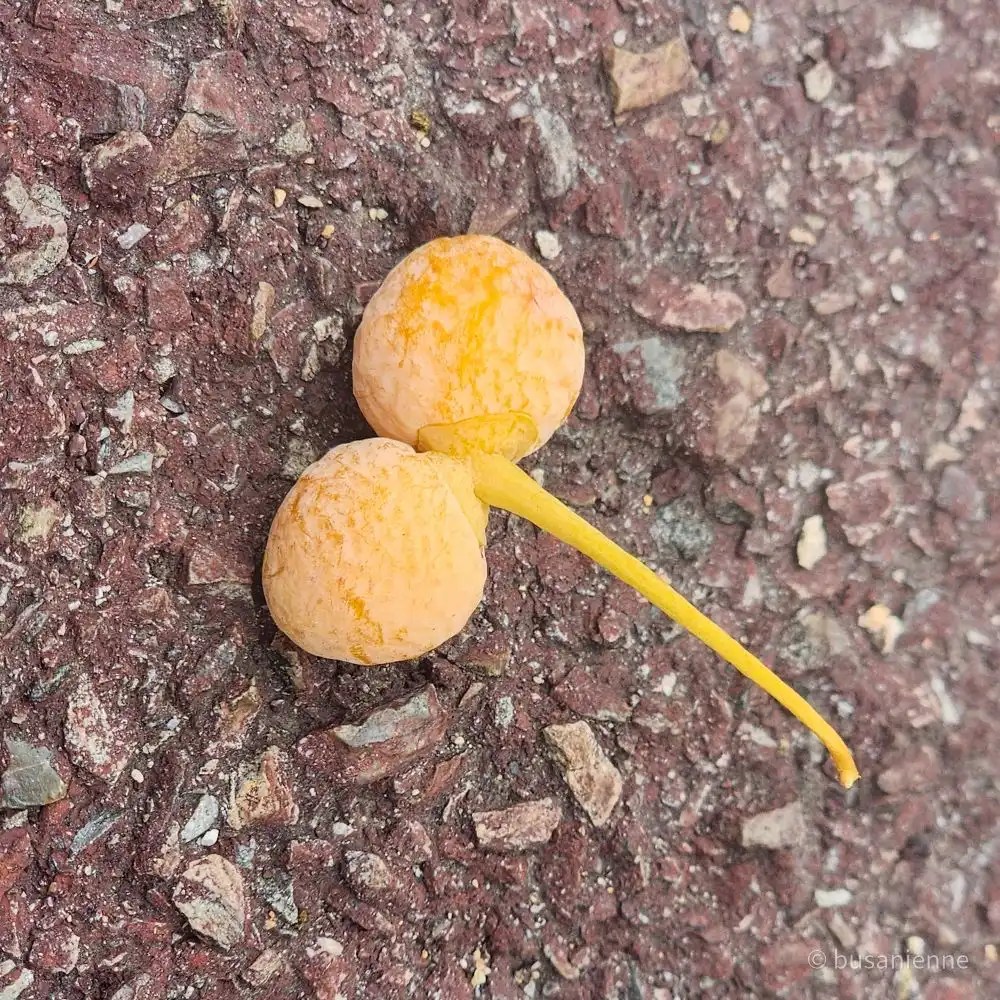
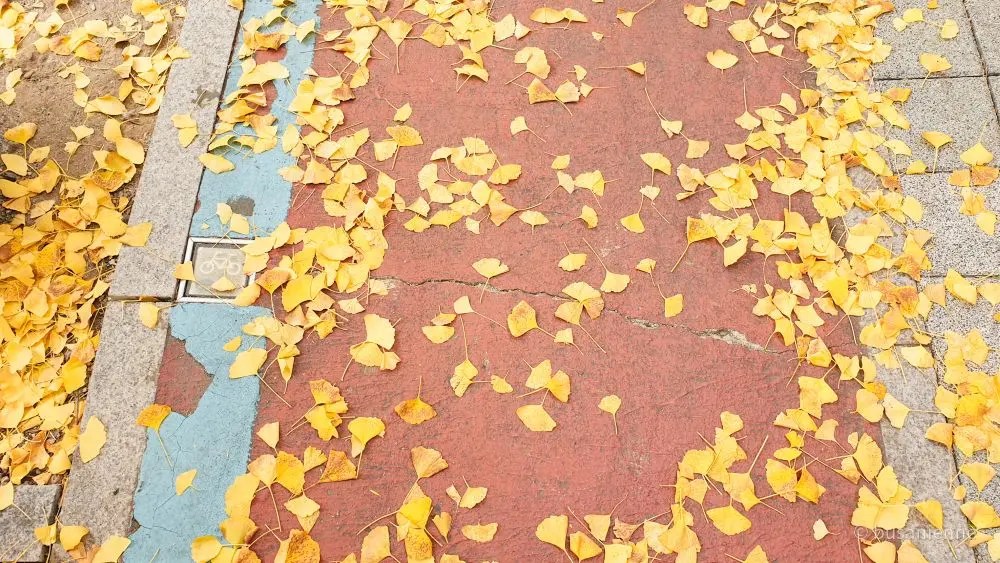
Il y a quelques jours, lors d’une balade matinale, j’ai vu deux petites boules de ginkgo par terre.
─── ୨୧ ───
A few days ago, while walking early in the morning, I saw two little ginkgo fruits lying on the street.
J’ai levé les yeux.
Et voilà.
─── ୨୧ ───
I looked up—and there it was.

Des arbres remplis de fruits.
À ce moment-là, je me suis dit :
« Ah, ça y est, l’automne est arrivé. L’été est bien fini ! » 🍁
─── ୨୧ ───
A ginkgo tree, full of fruit.
That moment made me think:
“Oh, fall is finally here. Summer’s gone.” 🍁

Un automne coréen… ça sent fort ? / Fall in Korea… What’s That Smell?
Si vous avez déjà été en Corée à l’automne, vous connaissez sûrement cette odeur.
Ce sont les fruits de ginkgo — ils tombent, sont écrasés sous les pas, et libèrent une odeur… inoubliable.
─── ୨୧ ───
If you’ve ever been in Korea during autumn, you probably know that smell.
It’s the ginkgo fruit — they fall, get crushed underfoot, and release this very… memorable scent.

Pas très agréable, c’est vrai.
Même nous les Coréens, on ne la supporte pas, cette odeur.
─── ୨୧ ───
Not the most pleasant smell, honestly.
Even we Koreans can’t stand that smell.
It’s way too overpowering!

🌳 Pourquoi tant de ginkgos dans les rues coréennes ? / Why Are Ginkgo Trees Everywhere in Korea?
En Corée, les rues sont bordées de ginkgos.
C’est l’arbre d’alignement le plus répandu.
─── ୨୧ ───
In Korea, ginkgo trees line many city streets — they’re actually the most common roadside tree.

Pourquoi ?
Parce qu’il résiste bien à la pollution, aux maladies, et pousse droit, ce qui le rend parfait pour les villes.
─── ୨୧ ───
Why?
Because they’re tough: resistant to pollution and pests, and they grow straight.
That’s quite ideal for urban spaces.
🍂 Mais il y a un hic ! / But There’s a Catch
L’odeur des fruits tombés ! 😵
C’est pourquoi les municipalités plantent désormais des ginkgos mâles, qui ne produisent pas de fruits.
Pour les arbres femelles déjà en place, les fruits sont récoltés avant qu’ils ne tombent.
─── ୨୧ ───
Oh but there’s this smell of the fallen fruits! 😵
Not all ginkgo trees produce fruit — only the female ones do.
Because of frequent complaints, cities now tend to plant only male ginkgo trees (no fruit, no smell!).
For existing female trees, there’s a seasonal operation to collect the fruit before it falls.
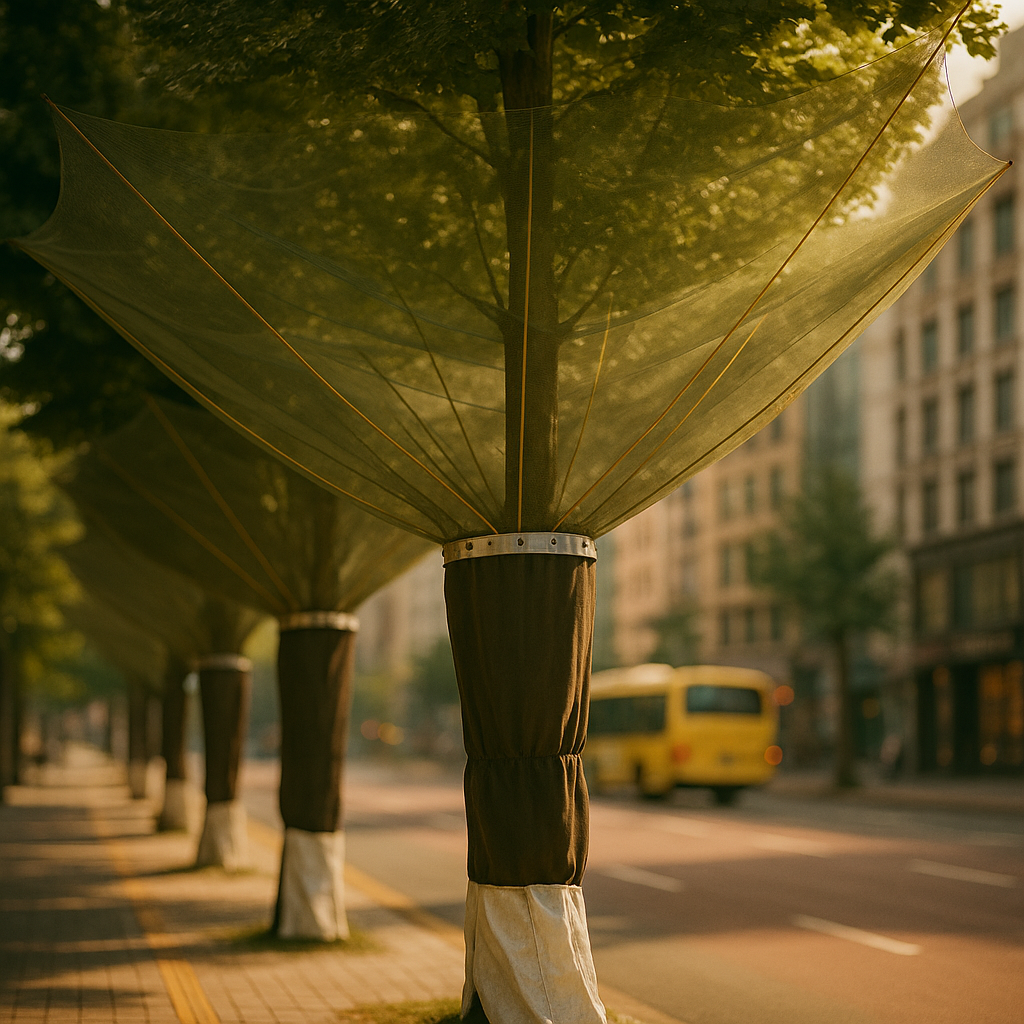
C’est une opération d’automne impressionnante : des agents municipaux déploient de grands filets et secouent les arbres pour faire tomber tous les fruits d’un coup.
(Dommage, je n’ai pas trouvé la photo que j’avais prise l’année dernière, ils étaient si impressionnants !)
─── ୨୧ ───
It’s a typical Korean autumn ritual: city workers stretch big nets under the trees and shake the branches to make the fruits drop all at once.
(Such a shame I couldn’t find the photo I took last year — it was really something to see!)

😬 Ceux qui secouent les arbres… avant la mairie ! / Before the City Gets There… Some Shake the Trees
Mais parfois, avant même que les employés municipaux n’interviennent, certaines personnes secouent les arbres pour récupérer les fruits de ginkgo par elles-mêmes ! 😬
(En Corée, cela peut même être puni par la loi, comme une forme de vol d’un bien sans propriétaire officiel.)
Et souvent, ces gens ne prennent que les fruits en bon état — le reste, ils le laissent tomber un peu partout.
─── ୨୧ ───
But sometimes, even before city workers come around, some people shake the trees to collect ginkgo fruits for themselves! 😬
(In Korea, this can actually be punished by law — it’s considered theft of unclaimed property.)
And they usually don’t pick up everything — just the good ones.

Alors ?
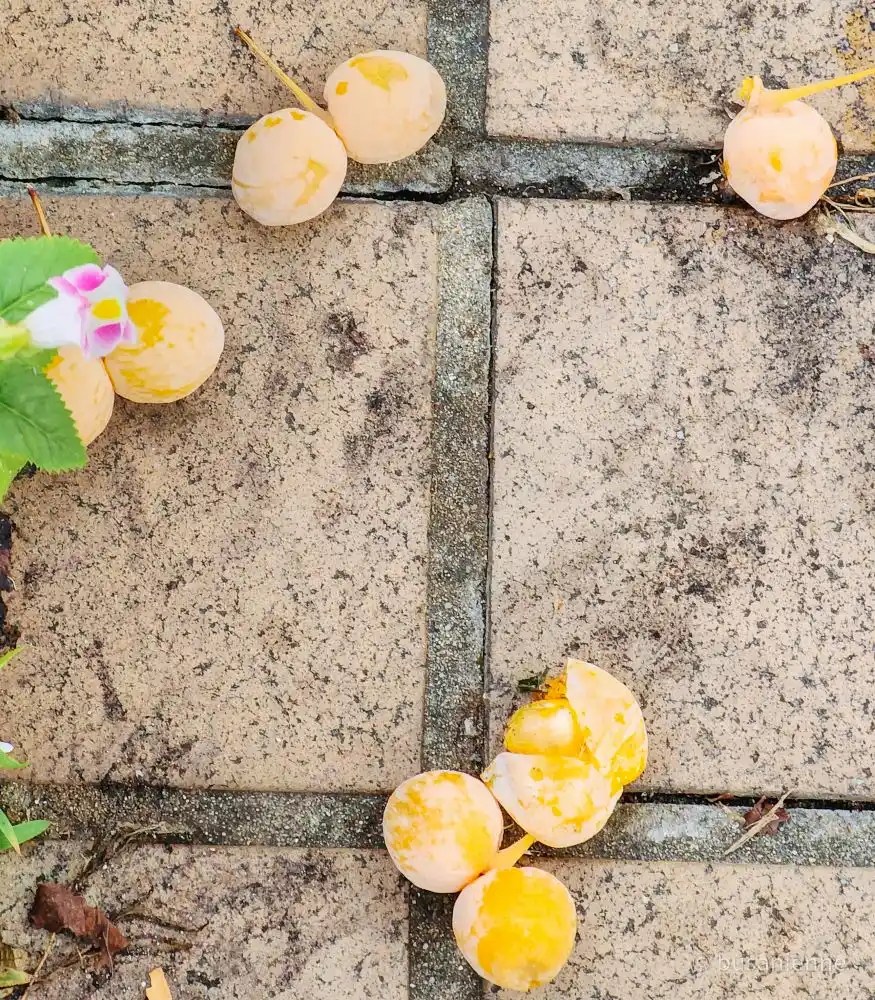
Des fruits écrasés sur le trottoir, et une odeur… abominable.
─── ୨୧ ───
The rest?
Left scattered all over the ground.
And when people walk by and step on them… the smell is intense.
🚫 Surtout, ne marchez pas dessus ! / Whatever You Do, Don’t Step on Them!
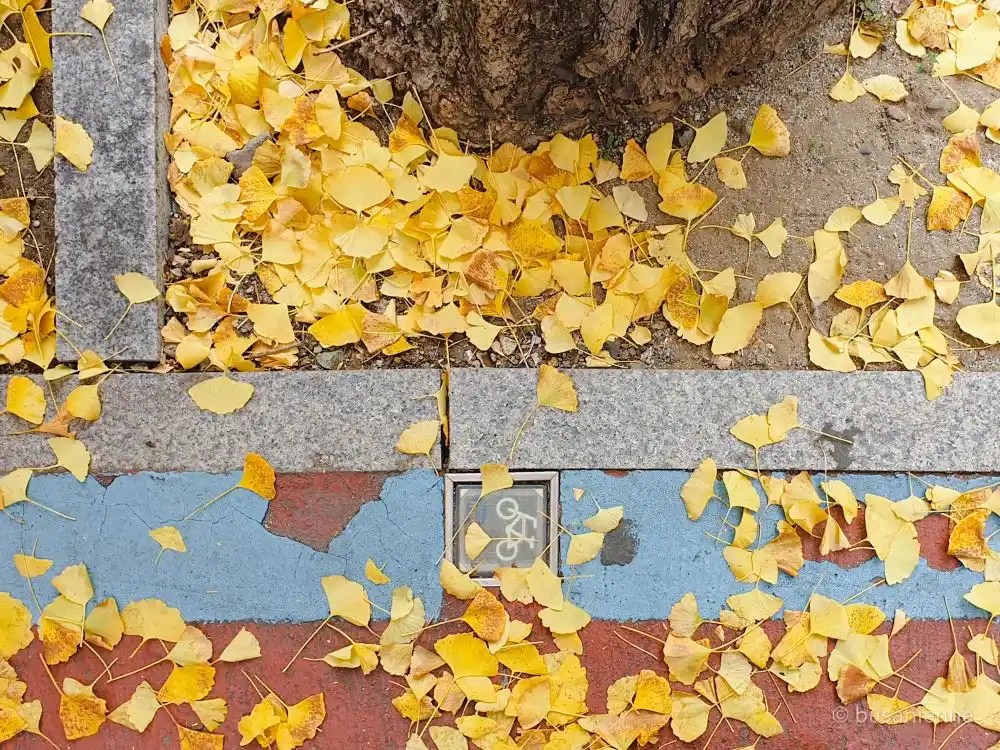
Alors s’il vous plaît — si vous marchez dans une rue pleine de ginkgos, ne marchez jamais sur les fruits tombés. Vos chaussures vont s’en souvenir… très longtemps. 😵💫
Et je ne veux pas que vous vous souveniez de cette odeur comme étant “l’odeur de la Corée”.
Genre, vous dites à vos amis de voyage : « Tu te rappelles l’odeur de la Corée ? Beurk. »
Mais nooooon! 😂
─── ୨୧ ───
So please — if you’re walking down a ginkgo-lined street, never step on the fallen fruit.
Your shoes will carry that smell… for a very long time.
And I really don’t want you to remember that smell as “the smell of Korea.”
Like, telling your travel buddy: “Hey, remember that Korean smell? Ew.”
Let’s not go there. 😂
📌 Comment dire « ginkgo » en coréen ? / How to say “ginkgo” in Korean?
은행 Eunhaeng = fruit de ginkgo / aussi « banque »
🌳 은행나무 (Eunhaengnamu) = arbre de ginkgo
Même mot que « banque » en coréen, c’est le contexte qui compte ! 😉
─── ୨୧ ───
은행 Eunhaeng = ginkgo fruit / also “bank”
🌳 은행나무 (Eunhaengnamu) = ginkgo tree
Same spelling for “bank” too — so context is everything! 😉


✨ 한국어 일기
수영장에서 귀걸이를 잃어버렸다.
외숙모가 선물로 준, 완전 빈티지였는데!
사람들은 하나같이 “요즘 금값 비싼데, 아깝다…”는 말만 했다.
…그게 문제가 아니라구요. 😭
![[Busan/Expo] Quand les portraits parlent plus que les livres | When Portraits Tell More Than Books - 거장의 비밀](https://busanienne.com/wp-content/uploads/2025/12/20251128_145250.webp?w=1000)



![[Japon/Japan] On va à Sapporo ? / Shall We Go to Sapporo?](https://busanienne.com/wp-content/uploads/2026/03/img_0336.webp?w=1024)
 BUSANIENNE
Leave a comment