4–5 minutes
공주 Gongju

Le voyage à 공주 « Gongju » était un peu improvisé.
C’est une grande ville située dans la province de Chungcheong.

✼ •• ┈┈┈┈┈┈┈┈┈┈┈┈ •• ✼

Last month, I went on an impromptu trip to 공주 (Gongju) with my family.
It’s a big city located in the Chungcheong Province.


Wide view of the entrance area of Magoksa Temple in Gongju, South Korea, featuring pine trees, green spring foliage, and pink azalea bushes surrounding the temple’s stone monument.
마곡사 Magoksa
Close-up of the stone monument marking the entrance of Magoksa Temple in Gongju, South Korea, surrounded by green trees and blooming azaleas.
The stone monument at the entrance of Magoksa Temple.

Vous vous souvenez de mon voyage à 부여 « Buyeo » l’année dernière ?
Je n’avais publié qu’un seul post sur 부여, et c’était à propos d’un restaurant. 😅🤣

✼ •• ┈┈┈┈┈┈┈┈┈┈┈┈ •• ✼

Do you remember my trip to 부여 (Buyeo) last year?
I only wrote one post about it, and it was about a restaurant. 😅🤣
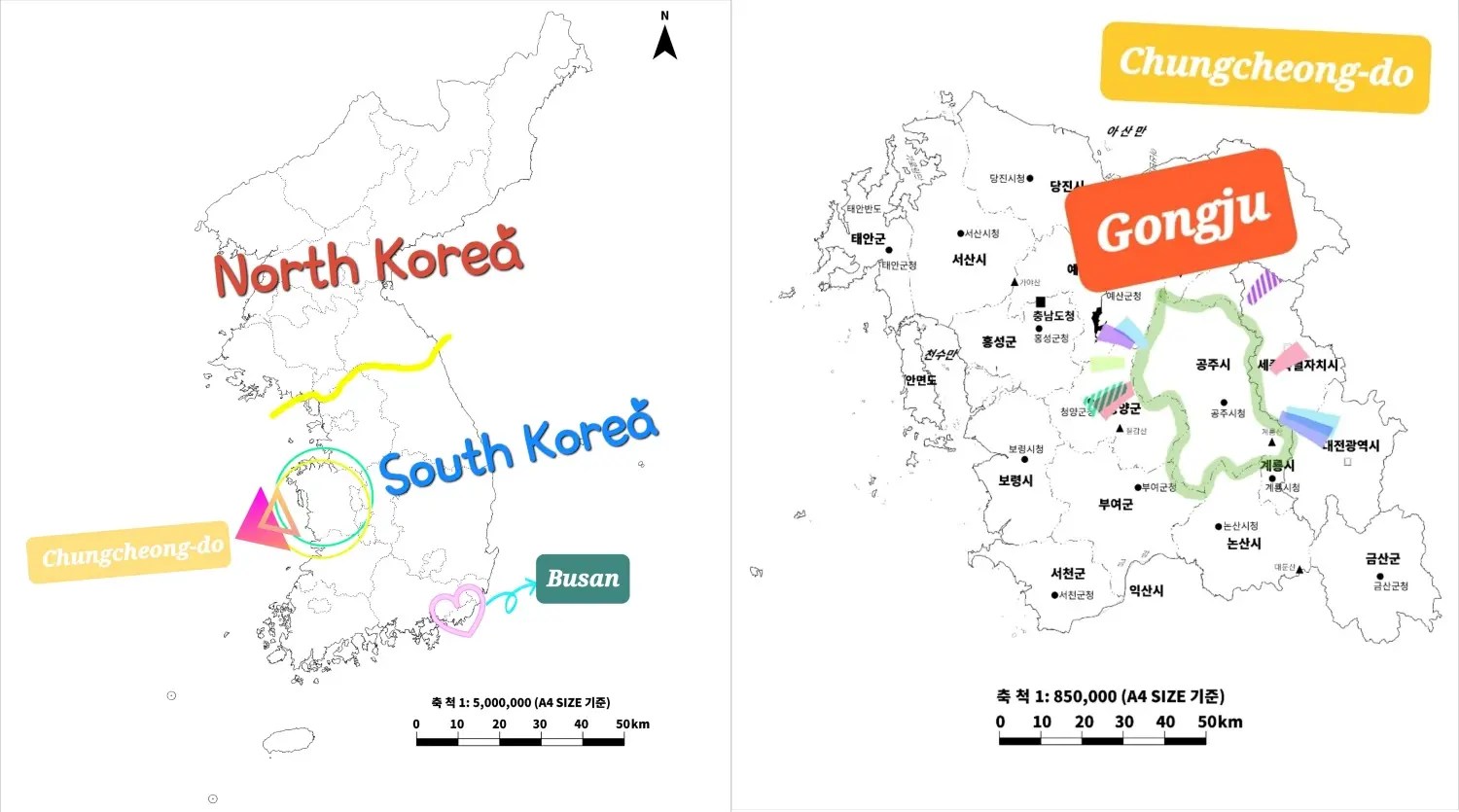

carte / map

공주 « Gongju » est une grande ville, mais calme, située juste à côté de 부여 « Buyeo ».

✼ •• ┈┈┈┈┈┈┈┈┈┈┈┈ •• ✼

공주 (Gongju) is a large but peaceful city right next to 부여 (Buyeo).
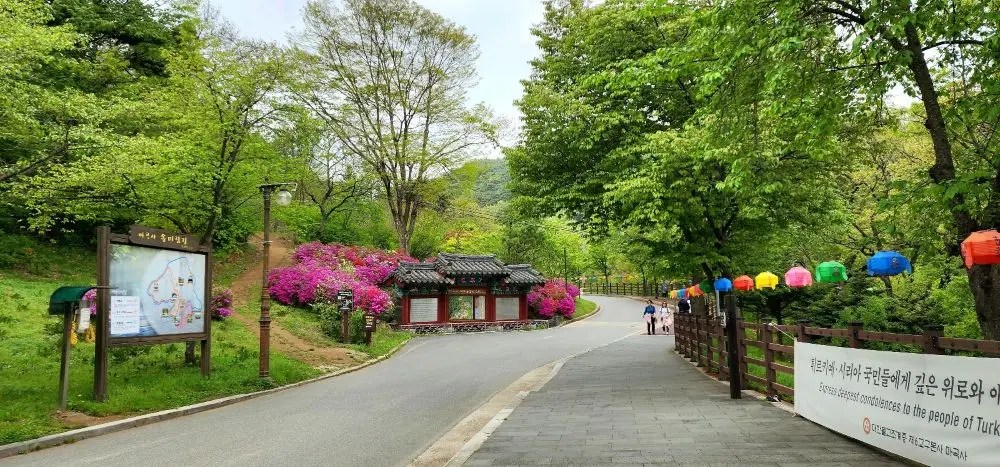

Entrance road leading to Magoksa Temple in Gongju, South Korea, lined with colorful lanterns, spring greenery, and blooming azaleas along the walkway.
The entrance road to Magoksa Temple, decorated with colorful lanterns.

Il y avait beaucoup de monde autrefois, mais maintenant la ville est devenue plutôt tranquille.

Comme dans d’autres villes rurales, les jeunes quittent la ville pour chercher une vie meilleure. 🙄👋

✼ •• ┈┈┈┈┈┈┈┈┈┈┈┈ •• ✼

In the past, the city was bustling with people, but now it has become relatively calm.

Like other rural areas, many young people have left to seek better opportunities. 🙄👋


A wooden walkway lined with colorful lanterns winding through the spring forest near Magoksa Temple in Gongju, South Korea.
A lantern-decorated walkway near Magoksa Temple.

Maintenant, dans le cadre d’un projet de régénération urbaine, la ville se réorganise pour attirer les touristes ! 👏👏👏

✼ •• ┈┈┈┈┈┈┈┈┈┈┈┈ •• ✼

Now, as part of an urban regeneration project, the city is being revamped to attract tourists! 👏👏👏
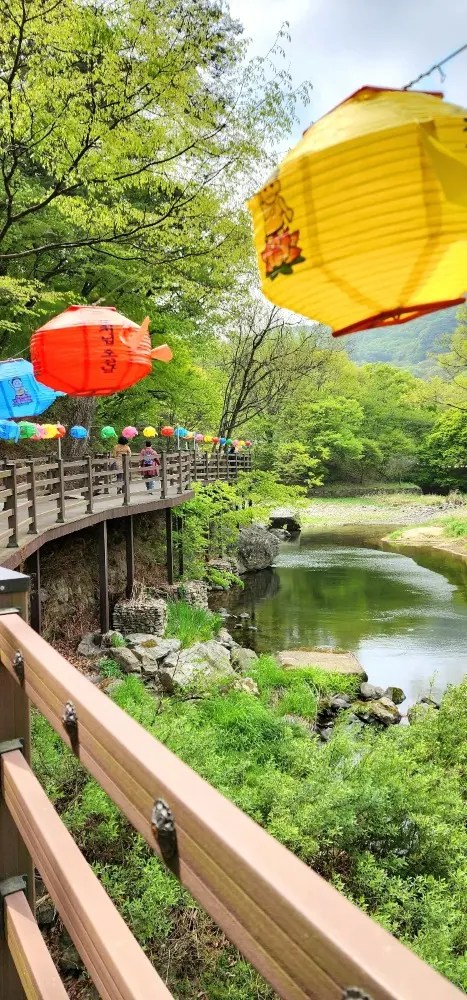

Colorful lanterns hanging above a wooden walkway along the river near Magoksa Temple in Gongju, South Korea, surrounded by lush spring greenery.
마곡사 Magoksa

En tout cas, le nom « 공주 » (« Gongju ») est un homonyme du mot « princesse » en coréen 👸, mais les deux n’ont pas le même sens.

C’est un joli nom, n’est-ce pas ? 😎

✼ •• ┈┈┈┈┈┈┈┈┈┈┈┈ •• ✼

Anyway, the name of the city, “공주 (Gongju),” is a homonym for “princess” in Korean 👸, but they don’t actually mean the same thing. It’s a pretty name, though.

Don’t you think? 😎

Advertisements

A wide view of a stone bridge surrounded by spring greenery near Magoksa Temple in Gongju, South Korea, with colorful lanterns visible in the distance.

Ma famille est allée dans un temple bouddhiste appelé 마곡사 Magoksa.

✼ •• ┈┈┈┈┈┈┈┈┈┈┈┈ •• ✼

My family visited a Buddhist temple called 마곡사 Magoksa.
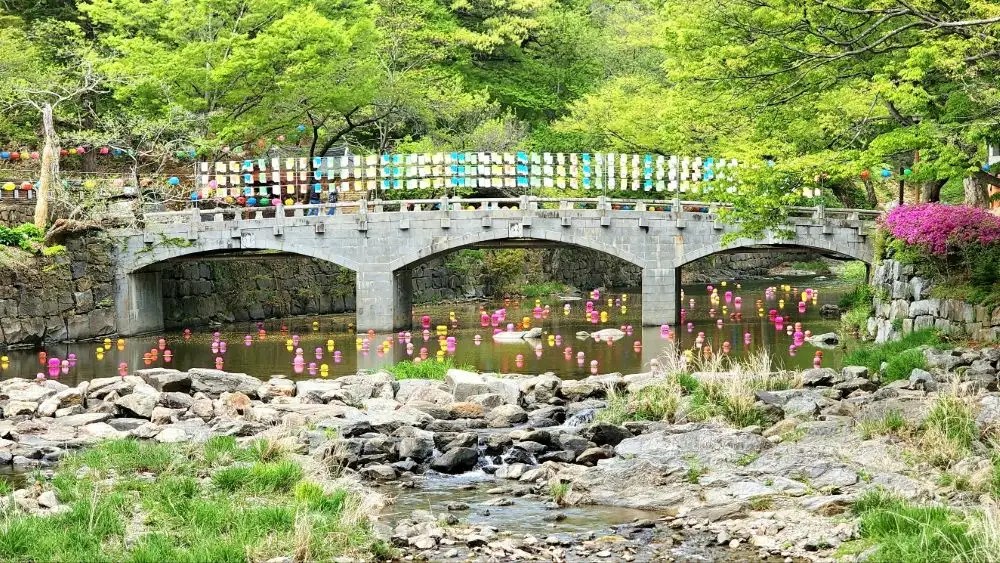

Floating pink and orange lanterns on the pond beneath the stone bridge at Magoksa Temple in Gongju, South Korea, surrounded by vibrant spring foliage.
Floating lanterns beneath the stone bridge at Magoksa Temple.

Comme toujours quand on voyage, on visite au moins un temple bouddhiste pour ma mère.

Ce temple est l’un des temples les plus connus à 공주 (« Gongju »).

✼ •• ┈┈┈┈┈┈┈┈┈┈┈┈ •• ✼


As always, when we travel, we visit a Buddhist temple for our mother.

This temple is one of the most famous temples in 공주 (Gongju).
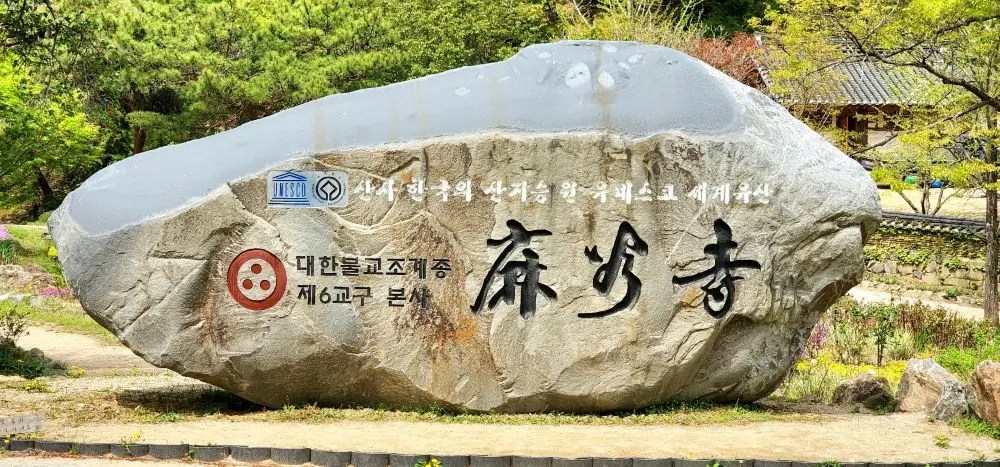

Stone monument marking Magoksa Temple’s UNESCO heritage status in Gongju, South Korea, surrounded by spring greenery.
The UNESCO stone monument at Magoksa Temple.

Le temple principal se trouve assez loin de l’entrée.

✼ •• ┈┈┈┈┈┈┈┈┈┈┈┈ •• ✼

The main temple is located quite a distance from the entrance.


Colorful spring garden near the entrance of Magoksa Temple in Gongju, South Korea, with blooming flowers, green trees, and traditional pathways.
Spring garden near the entrance of Magoksa Temple.
The main wooden gate of Magoksa Temple in Gongju, South Korea, showcasing traditional Korean Buddhist architecture with ornate eaves and colorful lanterns in the background.
The main entrance gate of Magoksa Temple.

Nous avons pris un taxi du centre-ville jusqu’à l’entrée du temple (30 minutes), puis nous avons marché jusqu’au temple principal (25 minutes).

✼ •• ┈┈┈┈┈┈┈┈┈┈┈┈ •• ✼

We took a taxi from downtown to the entrance of the temple (about 30 minutes), and from there, we walked to the main temple (another 25 minutes).
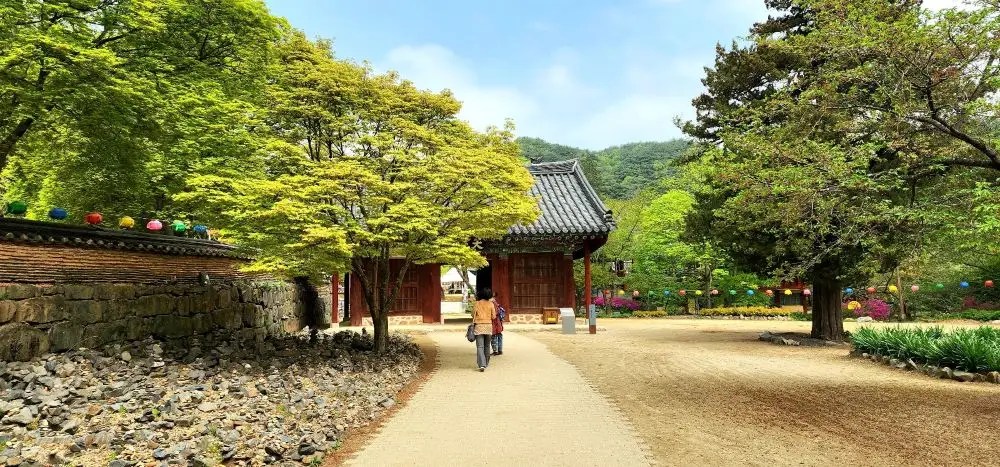

마곡사 Magoksa

C’était agréable de faire une promenade parce qu’il faisait beau.

✼ •• ┈┈┈┈┈┈┈┈┈┈┈┈ •• ✼

The weather was beautiful, so it was pleasant to take a walk.
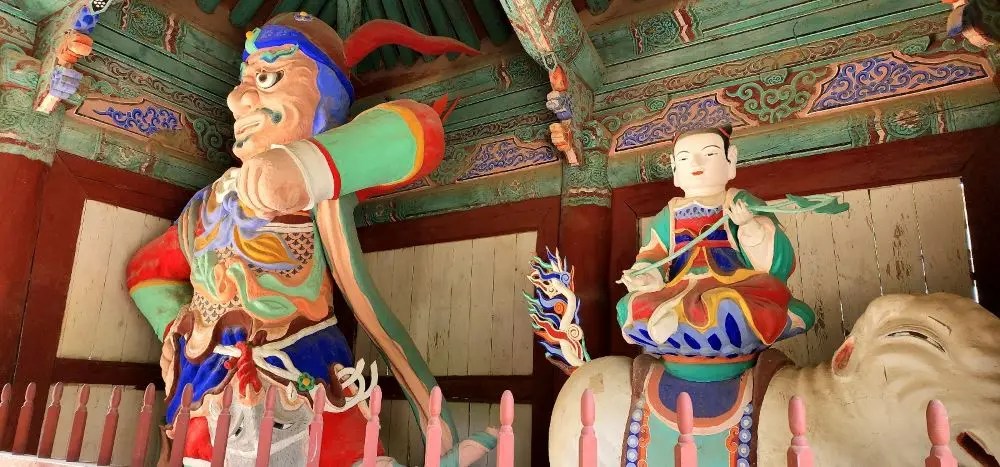

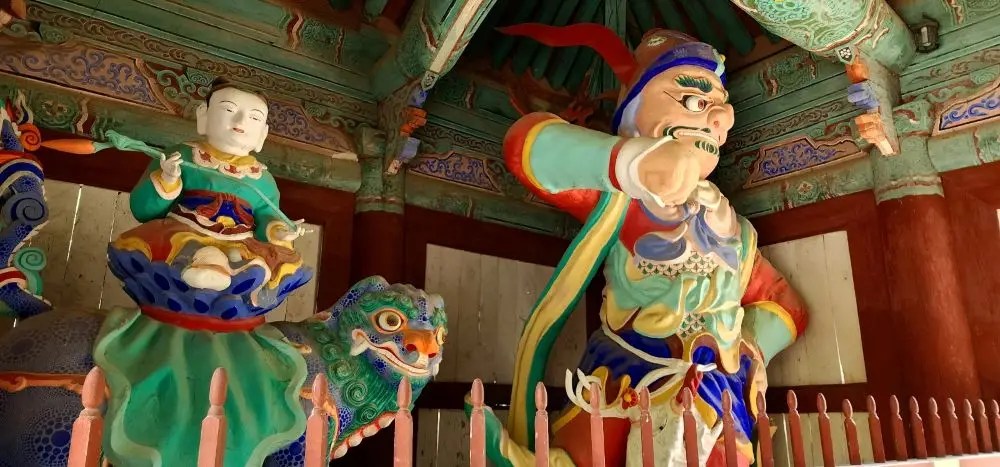
Colorful Korean Buddhist guardian statues inside the gate of Magoksa Temple in Gongju, South Korea, featuring detailed painted wooden figures.
Guardian statues inside the main gate of Magoksa Temple.
A brightly painted Korean Buddhist guardian statue inside the gate of Magoksa Temple in Gongju, South Korea, with intricate detailing and vivid colors.
A vividly painted guardian statue at Magoksa Temple.

Colorful lotus-shaped lanterns floating on the shallow pond at Magoksa Temple in Gongju, South Korea, surrounded by stone walls and spring greenery.
Floating lanterns on the pond at Magoksa Temple.
Colorful lanterns hanging among spring trees near the pond at Magoksa Temple in Gongju, South Korea, with bright green foliage and blooming flowers.
Lanterns hanging above the pond at Magoksa Temple.
Rows of colorful lanterns hanging along the bridge railings at Magoksa Temple in Gongju, South Korea, overlooking the pond below.
Lantern-lined bridge at Magoksa Temple.
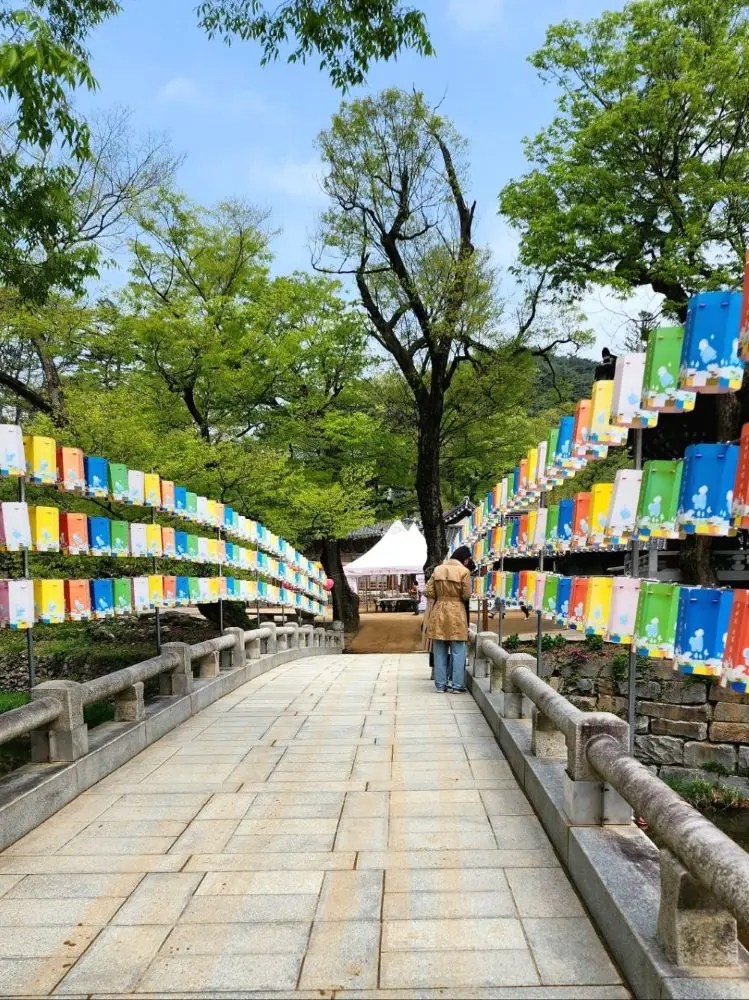
A stone bridge lined with colorful lanterns leading into Magoksa Temple in Gongju, South Korea, surrounded by spring trees and clear skies.
A lantern-lined stone bridge at Magoksa Temple.

Personnellement, je n’ai pas trouvé que le temple lui-même était particulièrement grandiose.

✼ •• ┈┈┈┈┈┈┈┈┈┈┈┈ •• ✼

Personally, I didn’t find the temple itself to be particularly magnificent.
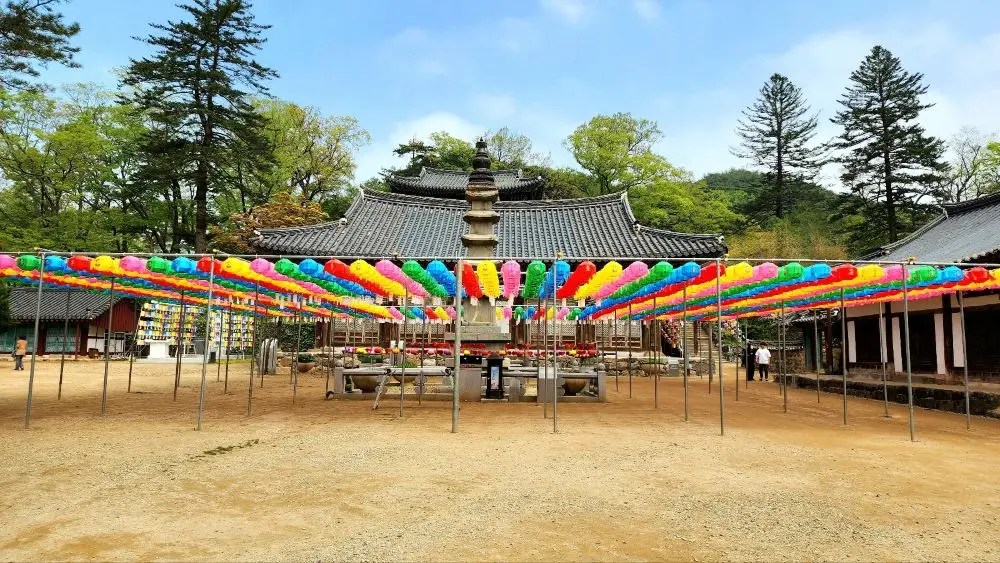

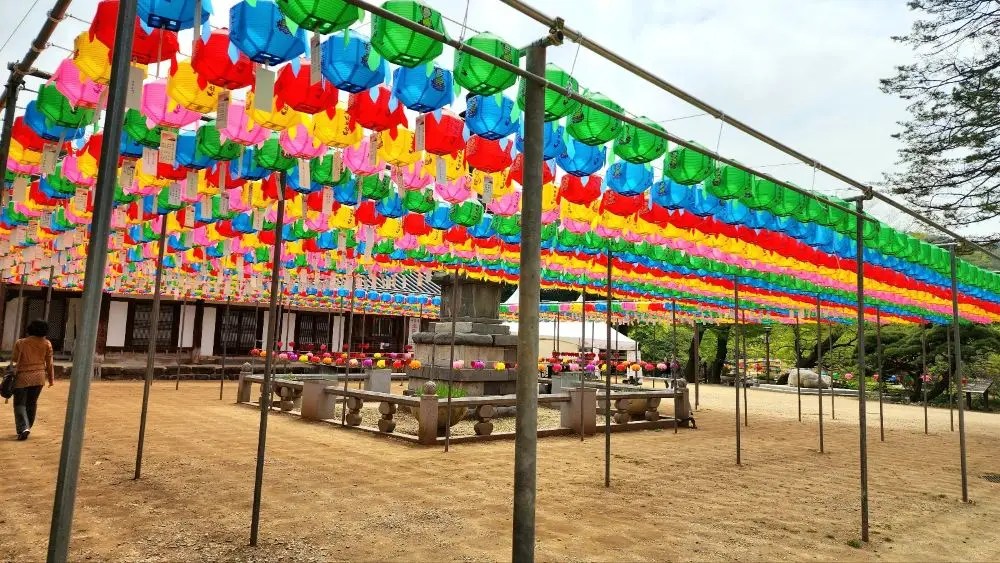
Colorful lantern canopy displayed across the main courtyard of Magoksa Temple in Gongju, South Korea, with a stone pagoda and traditional buildings in the background.
A vibrant lantern canopy in the main courtyard of Magoksa Temple.
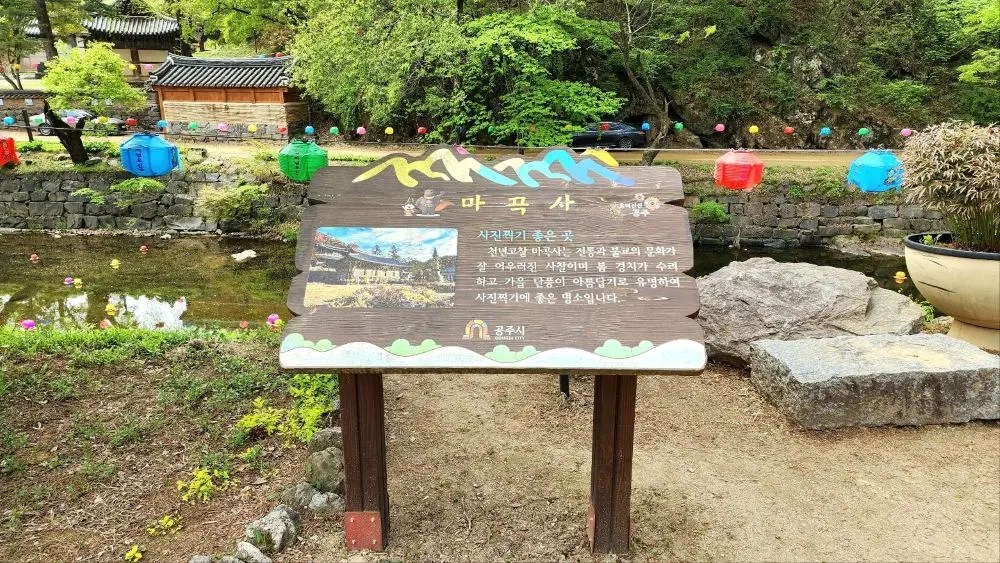
An information sign describing Magoksa Temple in Gongju, South Korea, placed beside a small stream decorated with colorful lanterns.

J’ai entendu dire qu’il y a plusieurs autres beaux temples à 공주 (« Gongju ») en plus de 마곡사 (« Magoksa »).

✼ •• ┈┈┈┈┈┈┈┈┈┈┈┈ •• ✼

I heard that there are several other beautiful temples in 공주 (Gongju) besides 마곡사 (Magoksa).
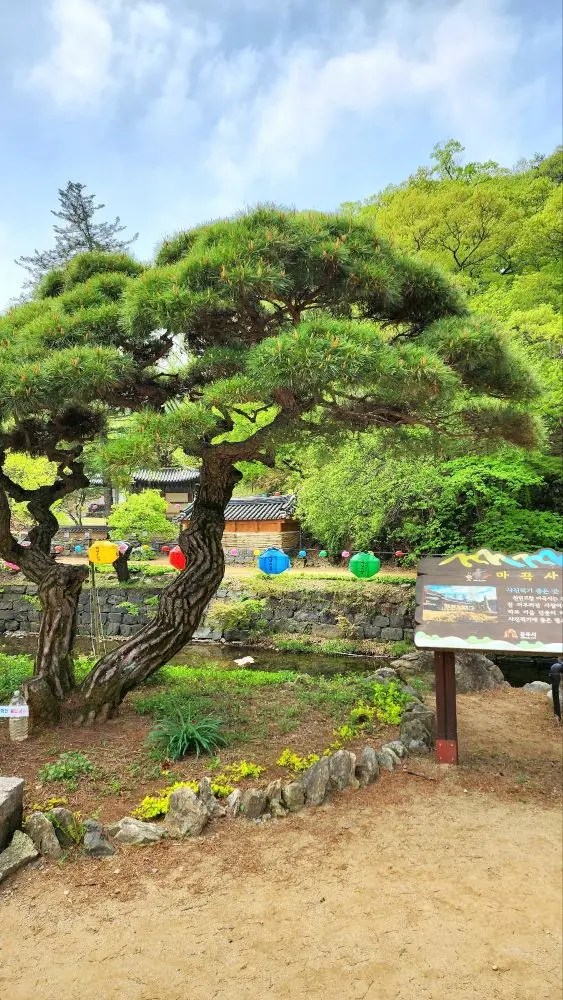

A beautifully sculpted pine tree in the garden of Magoksa Temple in Gongju, South Korea, surrounded by colorful lanterns and spring greenery.
A sculpted pine tree in the garden near Magoksa Temple.
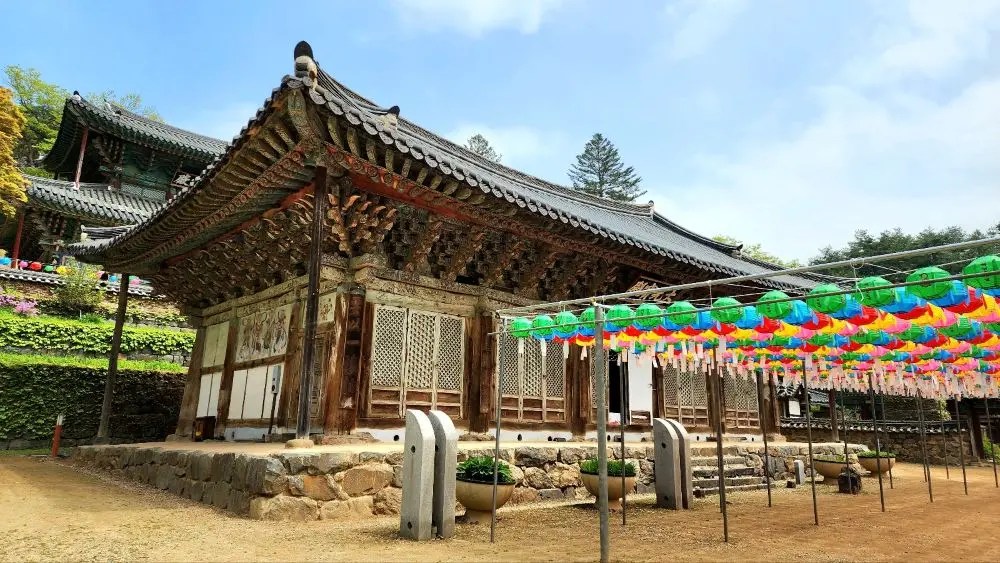
A traditional wooden hall at Magoksa Temple in Gongju, South Korea, with intricate roof architecture and rows of colorful lanterns displayed in the courtyard.
A lantern-decorated hall at Magoksa Temple.

Donc, si vous n’avez pas beaucoup de temps pendant votre séjour à 공주 (« Gongju »), je pense que vous n’avez pas forcément besoin de visiter le temple 마곡사 (« Magoksa »).
(Enfin, ce n’est que mon avis.) 😅

✼ •• ┈┈┈┈┈┈┈┈┈┈┈┈ •• ✼

So if you don’t have much time during your trip to 공주 (Gongju), I don’t think you necessarily need to visit 마곡사 (Magoksa) Temple.
(Of course, it’s just my personal opinion.) 😁

Advertisements

A white Avalokiteshvara (Gwaneum) Bodhisattva statue at Magoksa Temple in Gongju, South Korea, standing beneath rows of colorful lanterns and surrounded by ivy-covered stone walls.
Avalokiteshvara statue beneath lanterns at Magoksa Temple.
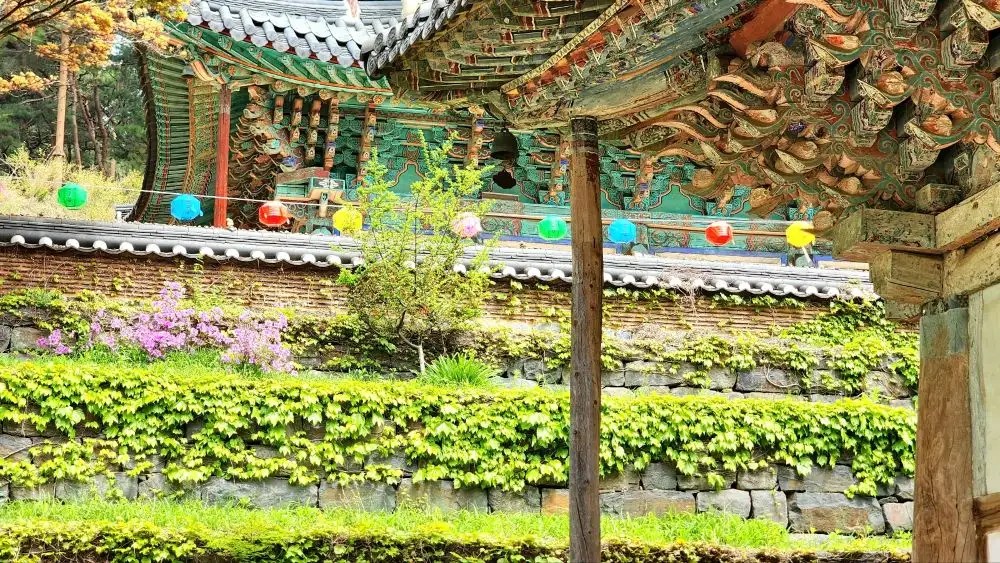
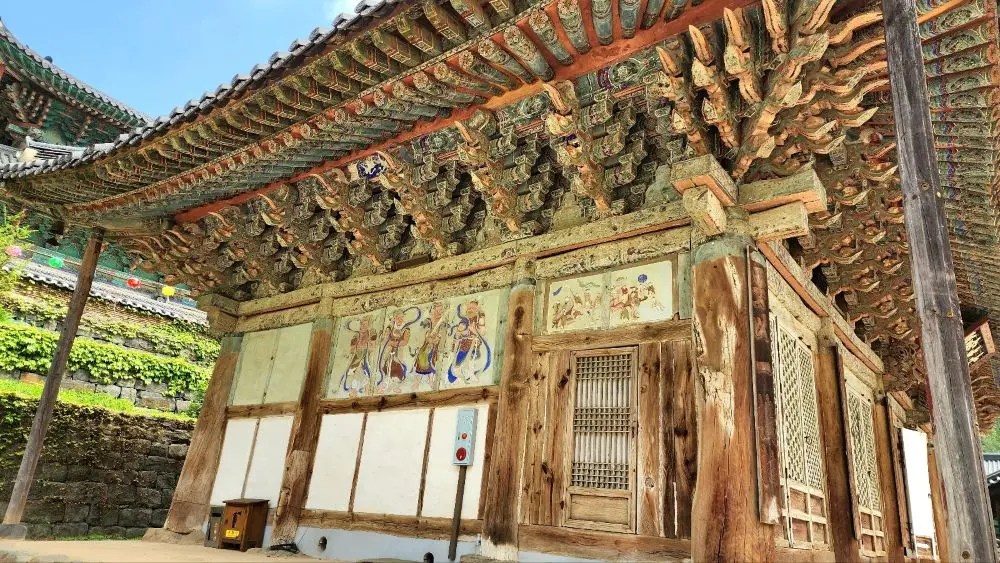
A traditional wooden hall at Magoksa Temple in Gongju, South Korea, featuring dancheong-painted eaves and Buddhist wall paintings.
Traditional hall with dancheong eaves at Magoksa Temple.
A traditional wooden hall at Magoksa Temple with intricate lattice windows and richly decorated roof eaves in Gongju, South Korea.
A wooden hall with intricate lattice windows at Magoksa Temple.
Colorful lanterns displayed beside the upper hall of Magoksa Temple in Gongju, South Korea, surrounded by spring trees and stone terraces.
Lanterns displayed near the upper hall at Magoksa Temple.
A close-up of dancheong-painted eaves at Magoksa Temple with colorful lanterns hanging beside stone terraces in Gongju, South Korea.
Dancheong details and lanterns at Magoksa Temple.
A colorful lantern canopy suspended above the stone pagoda in the courtyard of Magoksa Temple in Gongju, South Korea.
Lantern canopy above the stone pagoda at Magoksa Temple.
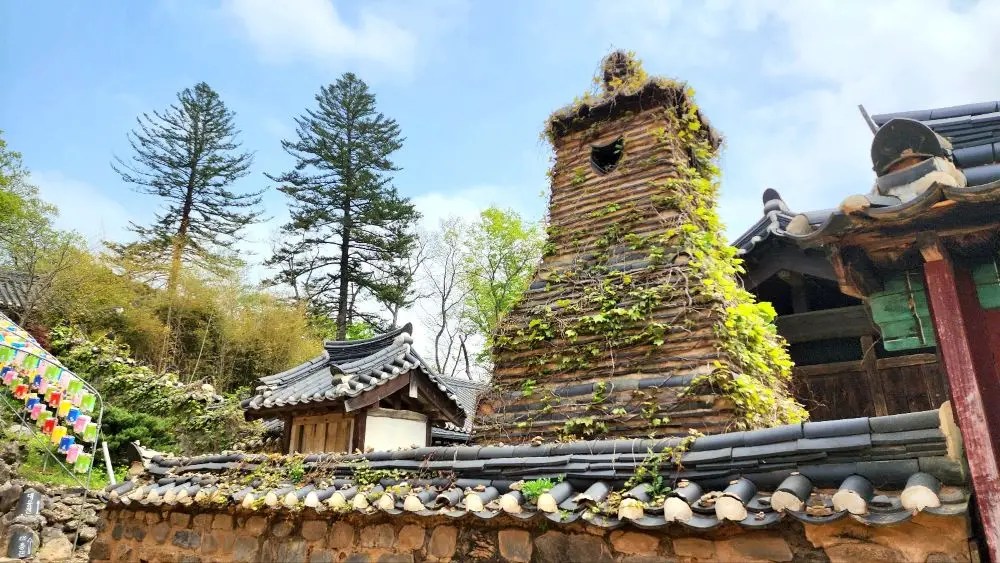
A traditional Korean temple chimney covered in ivy at Magoksa Temple in Gongju, South Korea, with tiled roofs and spring trees in the background.
Ivy-covered chimney structure at Magoksa Temple.
Stacks of small prayer stones arranged along the tiled wall of Magoksa Temple in Gongju, South Korea.
Prayer stones placed along the temple wall.
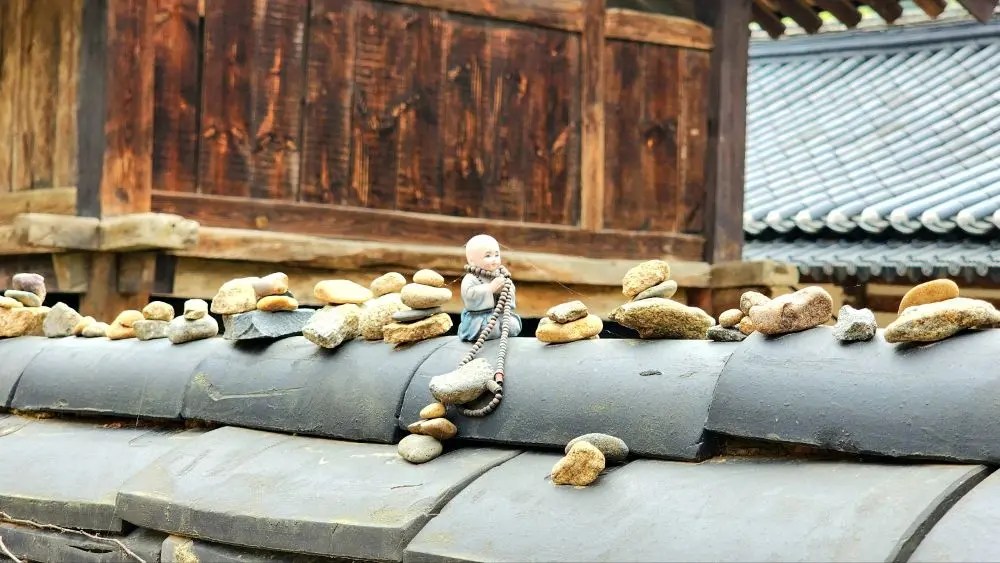
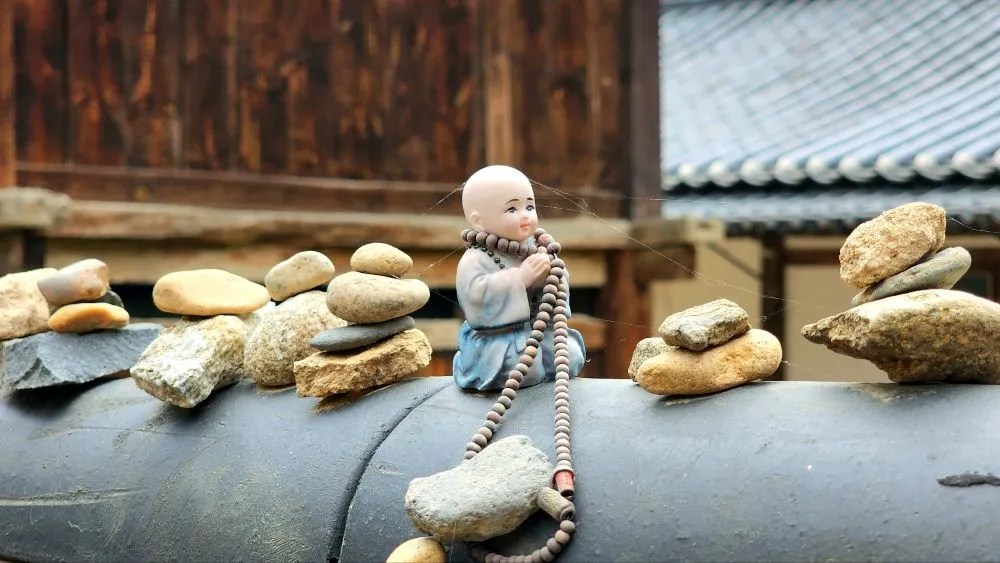
A small monk figurine holding prayer beads placed among stacked stones on a temple wall at Magoksa Temple in Gongju, South Korea.
A monk figurine placed among prayer stones.
A close-up of a small monk figurine holding prayer beads, placed among stacks of stones at Magoksa Temple in Gongju, South Korea.
Close-up of the monk figurine with prayer beads.
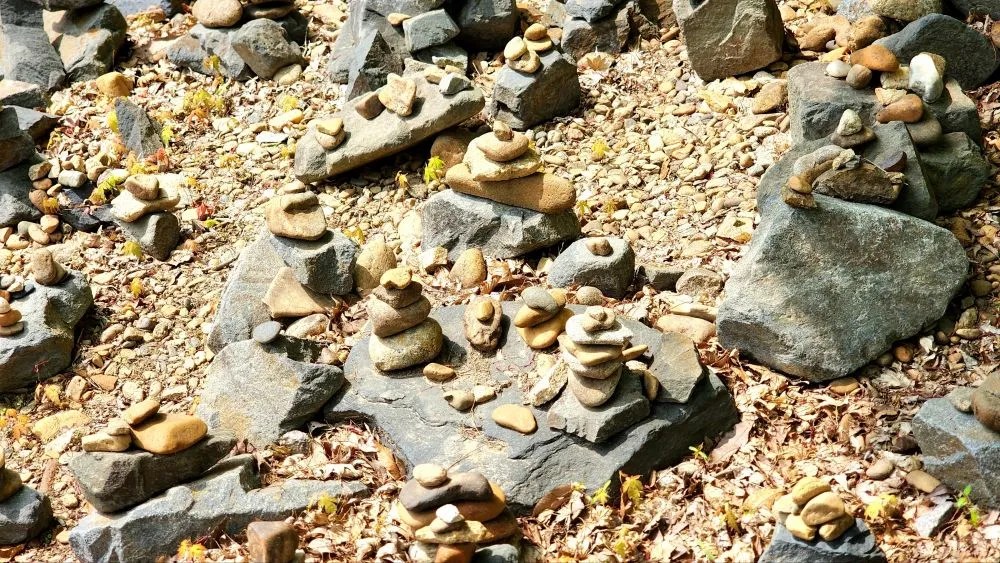
A ground area filled with stacked prayer stones at Magoksa Temple in Gongju, South Korea, arranged on rocks and pebbles.
Stacks of prayer stones at Magoksa Temple.
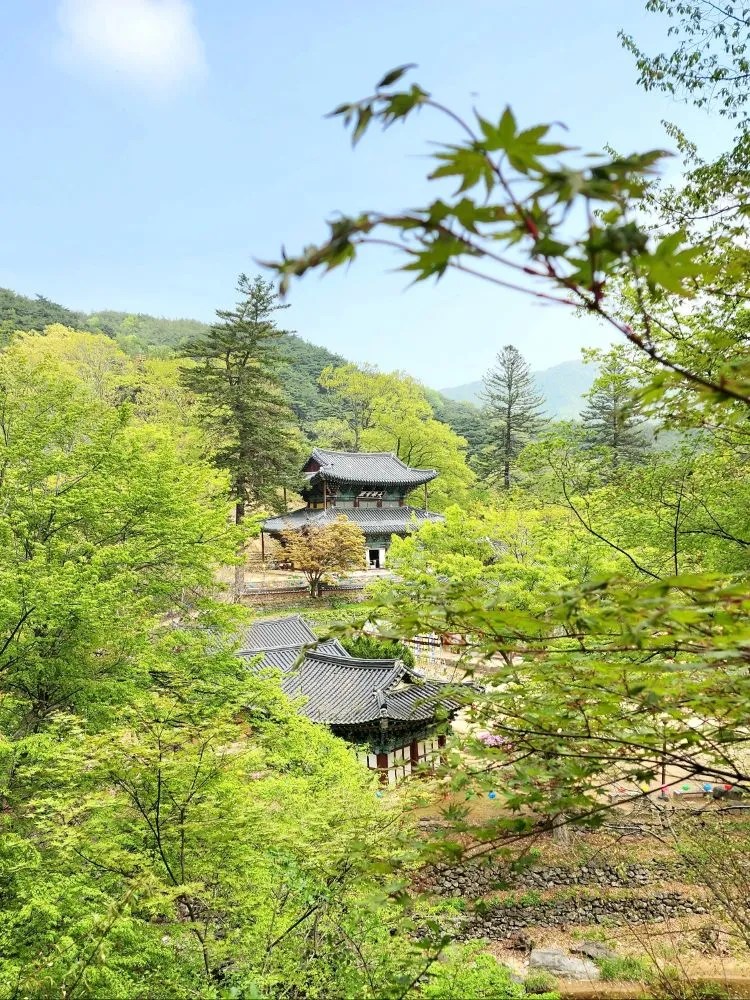
An elevated view of Magoksa Temple in Gongju, South Korea, seen through bright spring foliage with traditional rooftops nestled among forested mountains.
A scenic overlook of Magoksa Temple surrounded by spring greenery.
A stepping-stone bridge crossing a clear stream near Magoksa Temple in Gongju, South Korea, with lanterns hanging along the riverside and traditional buildings in the distance.
A stepping-stone bridge by the river at Magoksa Temple.
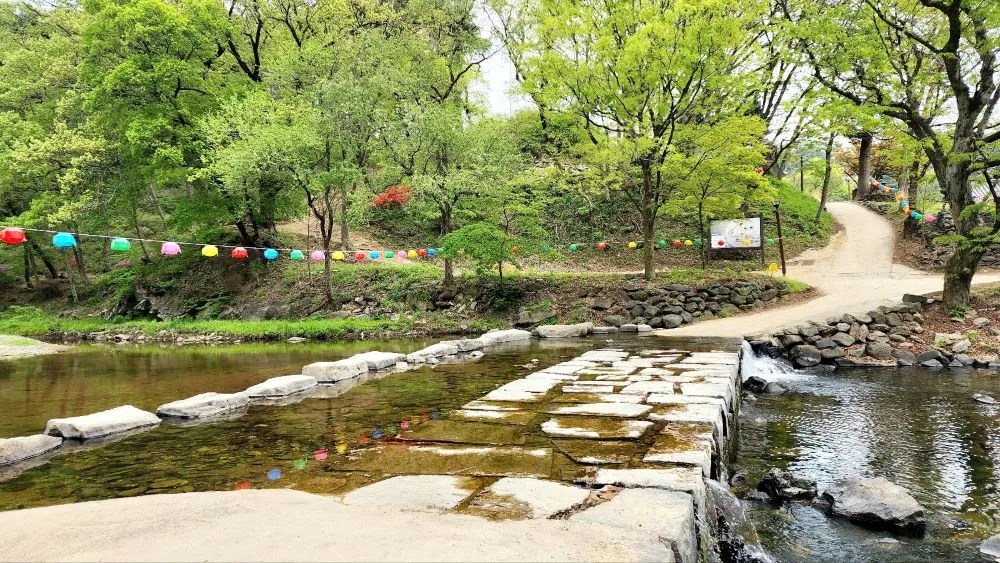
Stepping stones crossing a calm stream at Magoksa Temple in Gongju, South Korea, with a line of colorful lanterns hanging among fresh spring trees.
Stepping stones and lanterns along the stream.

🏞️ 공주 마곡사 – Gongju Magoksa Temple
🙏 Gongju Magoksa Temple
🏡 Adresse(Address) 966, Magoksa-ro, Sagok-myeon, Gongju-si, Chungcheongnam-do
📞 Téléphone(Contact) +82-41-841-6220~3
Horaires(Hours)
* Ouvert tous les jours / Open everyday
🎫 Tarifs/Tickets entrée libre(à partir du 4 mai 2023) / Free admission (from 4th May 2023)
🌐 Site Officiel/Website http://www.magoksa.or.kr/
🗺️ Carte(Map) naver.me/xVl3cWjR


Advertisements

Découvrez plus de BUSANIENNE

Suivez mes récits de Corée ! 🌿

Discover more from BUSANIENNE

Moments from Korea—delivered

🌿 🌿 🌿

10 responses

  1. It is sad that there were so few people visiting the temple. I love all the colourful lanterns, so many! Whoever had the job of hanging all of them up…phew! Forgive my ignorance but can you explain the pebbles on the roof tiles? Who puts them there so high up and why? 🌹🙋‍♂️

    Liked by 1 person

    1. Oh, they are “돌탑 Doltop(=stone towers)” stacked up by individuals who visited the temple.

      Many Korean people like to make a wish or pray while stacking up stones at temples(+parks, moutains too😆). 🙏

      There are people who build their own stone tower but usually people just add one or two pieces of little stones to an exsting stone tower while passing by.

      So we have to be very careful not to knock down another stone tower while we’re putting a stone because each stone has somebody’s wish. 😁🤩

      Liked by 1 person

    2. Thank you for the explanation 🙏 Perhaps they are prayers, too 🙏 🌹🙋‍♂️

      Liked by 1 person

  2. Thanks for sharing this idea. Let’s follow our blogs. Anita

    Liked by 1 person

    1. Thank you for your comment, Anita!
      I followed you back. Have a wonderful day!😊

      Liked by 1 person

    2. Thanks for stopping by Migy.

      Liked by 1 person

  3. Thanks for sharing this idea. Let’s follow our blogs. Anita

    Liked by 1 person

  4. Beautiful! 👍👍

    Liked by 1 person

    1. Thank you for your comment!
      Have a wonderful day! 😊

      Liked by 1 person

    2. You too

      Liked by 1 person

Leave a comment