🌡️ De la 무더위(mou.do.oui) à Daefrica / From 무더위(mu-duh-wi) to Daefrica
Vous vous souvenez de mon post sur la 무더위 (mou.do.oui) ?
Cette chaleur moite, lourde et étouffante qui colle à la peau ?
─── ୨୧ ───
Remember my post about 무더위 (mu‑duh‑wi)?
That sticky, heavy, suffocating heat that clings to your skin? 🥵

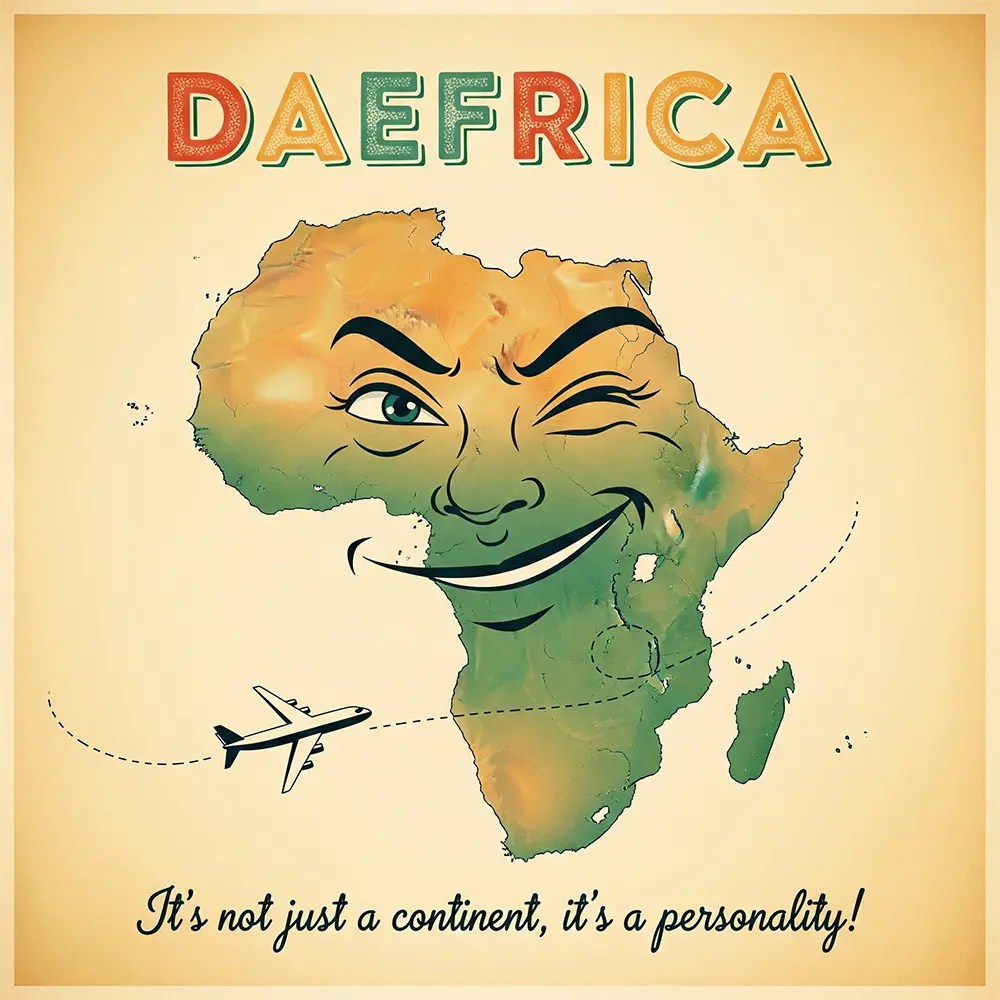
Aujourd’hui, parlons de son équivalent géographique : Daefrica, un néologisme coréen formé à partir d’un mot-valise qui désigne Daegu, une ville réputée pour ses étés particulièrement accablants. ☀️
─── ୨୧ ───
Today, let’s talk about its place-specific version: Daefrica — a witty Korean mashup word referring to Daegu, a city notorious for its especially brutally hot summers. ☀️

🌍 Daegu + Africa = Daefrica 🔥
Daefrica, c’est tout simplement Daegu + Africa.
Pourquoi cette association ?
Parce que Daegu est connue pour ses étés lourds et étouffants.
Et je vous assure : même avec nos brises marines, l’été à Busan est censé être plus supportable…
Mais non. Pas pour moi cette année ! 🥵😂
─── ୨୧ ───
Daefrica simply comes from Daegu + Africa.
Why this combo?
Because Daegu is infamous for its heavy, stifling summers.
And as a proud Busanian (yes, Busanienne!), I should say — with our coastal breeze, Busan summers are supposed to feel more tolerable…
But nope. Not for me this year. 🥵😂

🧭 Un petit mot pour nos lecteurs africains / A note for our African readers
J’espère que l’utilisation d’« Africa » dans ce contexte ne choque personne.
En Corée, c’est vraiment juste un jeu de mots sur de la chaleur — sans intention péjorative.
─── ୨୧ ───
I hope the use of “Africa” in this context doesn’t upset anyone.
In Korea, it’s truly just a pun about heat — no disrespect intended.

L’Afrique est un continent immense et diversifié, et ce mème repose uniquement sur un stéréotype climatique.
(Et franchement, si quelqu’un en Corée disait qu’« Afrique » = chaleur humide, il serait perçu comme mal informé.
Donc non, ce mot-valise n’a aucune mauvaise intention envers un autre continent. Plutôt : « plutôt ingénieux, non ? » 😉)
─── ୨୧ ───
Africa is vast and incredibly diverse, and the meme just riffs on a climate stereotype.
(Honestly — if someone in Korea said “Africa = humid heat,” they’d probably be seen as misinformed. So no, this coined word carries no ill intent toward any continent. It’s more like: “Pretty clever, isn’t it?” 😉)

🗺️ Pourquoi Daegu est-elle si chaude ? / Why is Daegu so hot?
Daegu se trouve dans une cuvette naturelle entourée de montagnes, ce qui emprisonne la chaleur.
Ajoutez l’effet d’îlot de chaleur urbain, et vous comprendrez vite pourquoi on l’appelle « Daefrica ».
─── ୨୧ ───
Daegu is located in a natural basin surrounded by mountains, which locks in the heat.
Add the urban heat island effect, and you’ll quickly see why people call it “Daefrica”.

🔤 Comment ça se prononce ? / How do you pronounce it?
Comme le coréen n’a pas de son “f”, « Daefrica » se prononce plutôt /dé.peu.li.ka/.
C’est presque musical, surtout avec un petit accent chantant de Busan !
Pour plus de détails sur la prononciation du coréen, n’hésitez pas à consulter mon guide de prononciation.
─── ୨୧ ───
Since Korean doesn’t have an “f” sound, Daefrica is pronounced more like /deh-pu-ri-ka/.
It has a nice rhythm to it — especially with a Busan accent!
For more on how to pronounce Korean words, check out my pronunciation guide.

🔁 Et maintenant… Gwangfrica ? / And now… Gwangfrica?
Ces dernières années, Gwangju(광주) a parfois battu Daegu(대구) en température, donnant naissance à un nouveau mème : Gwangfrica(광프리카).
On dirait bien que Daegu n’est plus toute seule…
Avec les vagues de chaleur de plus en plus fréquentes, on voit émerger un peu partout d’autres noms en « -frica ».
─── ୨୧ ───
In recent years, Gwangju(광주) has occasionally outheated Daegu(대구), giving rise to a new meme: Gwangfrica(광프리카).
Looks like Daegu’s not alone anymore.
With more heatwaves every year, we’re seeing “-frica” names pop up all over the place.
Au début, elle lit « Daefrica » et « Gwangfrica » à sa façon — influencée par ses origines de Chungcheong mais aussi par de longues années à Busan — puis, dans la seconde partie, je les lis à la façon Busanienne !
─── ୨୧ ───
First, she reads “Daefrica” and “Gwangfrica” in her own style — shaped by her Chungcheong roots but also many years in Busan — and then I read them in my Busan style!
🗣️ Où entendre ces expressions ? / Where to hear these expressions?
Vous ne trouverez pas ces mots dans un manuel, c’est sûr.
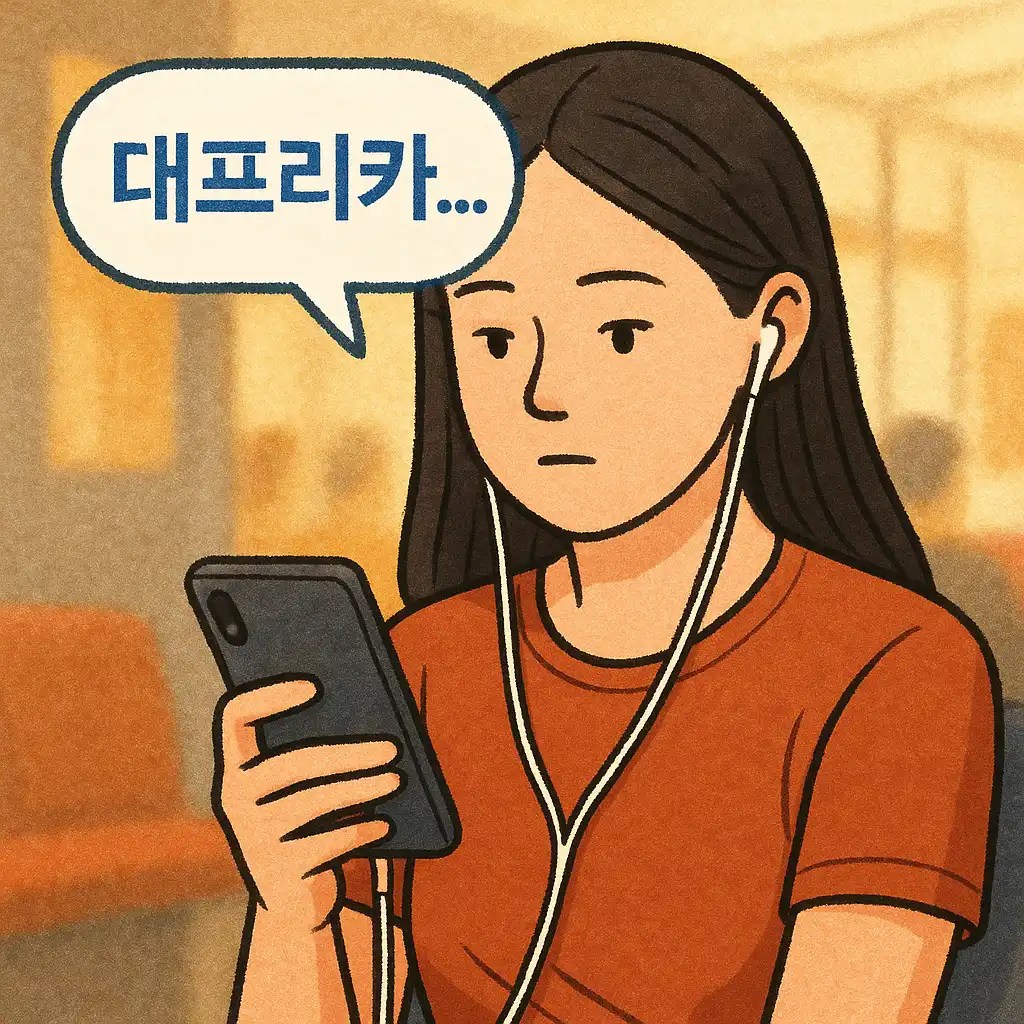
Mais en été, si vous traînez un peu sur les réseaux ou si vous tendez l’oreille dans le métro, vous allez sûrement tomber sur :
« 대프리카…blabla »
─── ୨୧ ───
You won’t find these in any textbook, that’s for sure.
But in summer, if you scroll through Korean socials or overhear some subway small talk, you’ll definitely hear:
“Daefrica…”— and maybe even “Gwangfrica.”

Vous voyez ? En Corée, on ne fait pas que râler contre la chaleur — on lui invente carrément des petits noms. 🤣
Ces mots ne sont pas officiels, mais ils font bel et bien partie du paysage estival coréen.
Et chez vous, vous avez aussi ce genre de surnoms pour la chaleur ?
─── ୨୧ ───
See? We don’t just complain about the heat — we give it nicknames too. 😁
They’re not official, but they’re part of the summer vibe around here.
Do you give heat silly names too, where you live?
📌 Note: Certaines illustrations ont été créées avec l’aide d’IA. / Some images were generated using AI tools (Copilot & Gemini & ChatGPT).
![[다이소] 아이스 트레이 원형 6구 6cm (품번: 1051122)](https://busanienne.com/wp-content/uploads/2025/09/icetray.webp?w=715)



![[Coréen/Korean] 사재기 — "Faire des stocks" en coréen / "Panic buying" in Korean](https://busanienne.com/wp-content/uploads/2026/04/20260324_101629.webp?w=1024)
 BUSANIENNE
Leave a comment